Congress, insiders and funds, side by side.
Congress members, company insiders and big funds all have to report their trades. SEPT gathers those filings in one place and shows where the three groups line up on the same stock.
SEPT Investing’s Smart Money page collects reported trades from public SEC and congressional filings: members of Congress (up to 45 days late), company insiders (about 2 business days behind) and 200 large funds from 13F reports (about one quarter behind). An Alignment view shows, stock by stock, where all three groups bought or all three sold.
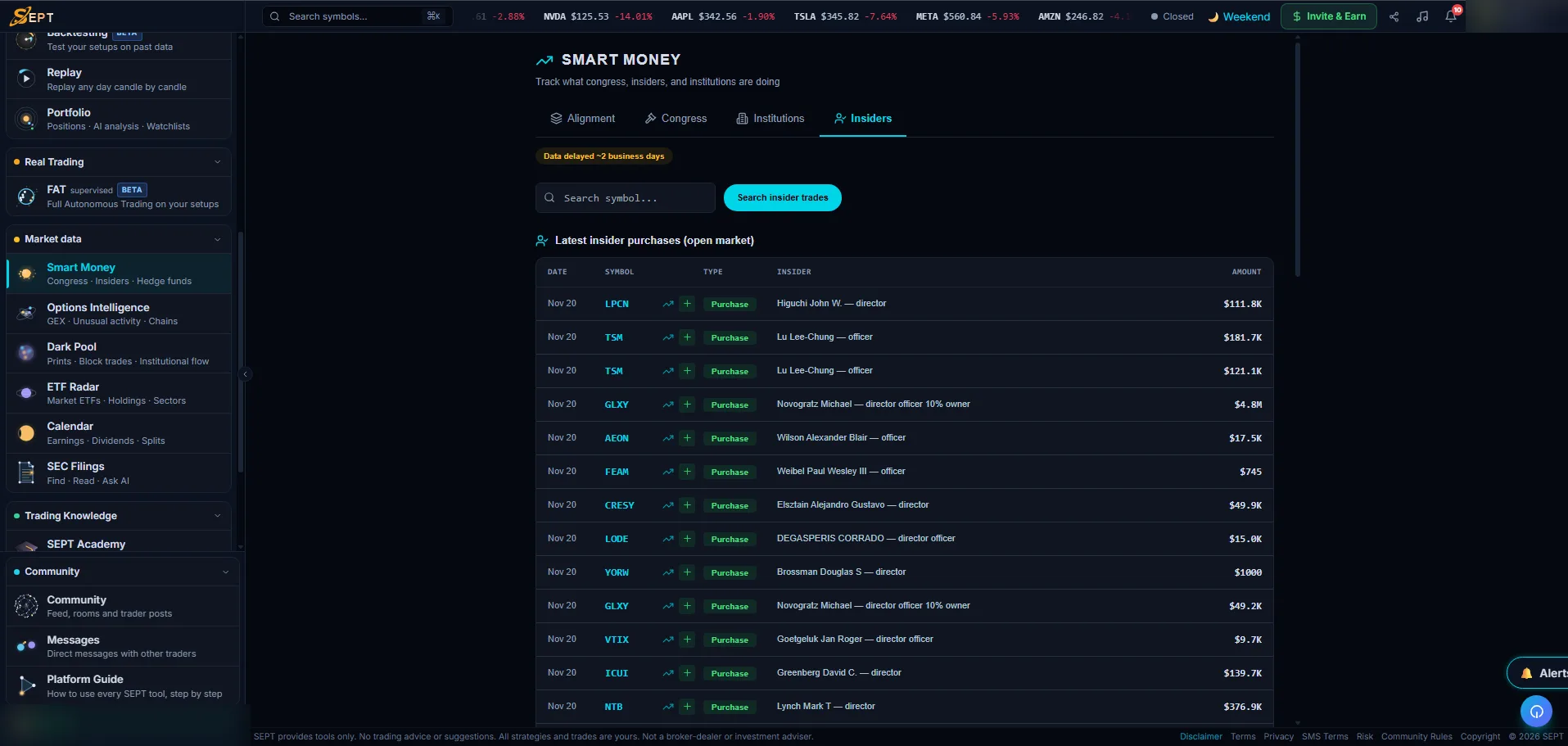
Where all three groups agree
One table per stock: Congress buys and sells, insider buys and sells and fund buys and sells, side by side. Filter to the stocks where all three groups bought, or where all three sold. A Congress buying heatmap covers the last 180 days. It covers thousands of Congress trades and 200 funds tracked every quarter.
Each group reports on its own schedule, so the three sides of the table can be weeks or months apart.
Congress, funds and insiders
Congress
Funds (13F)
Insiders
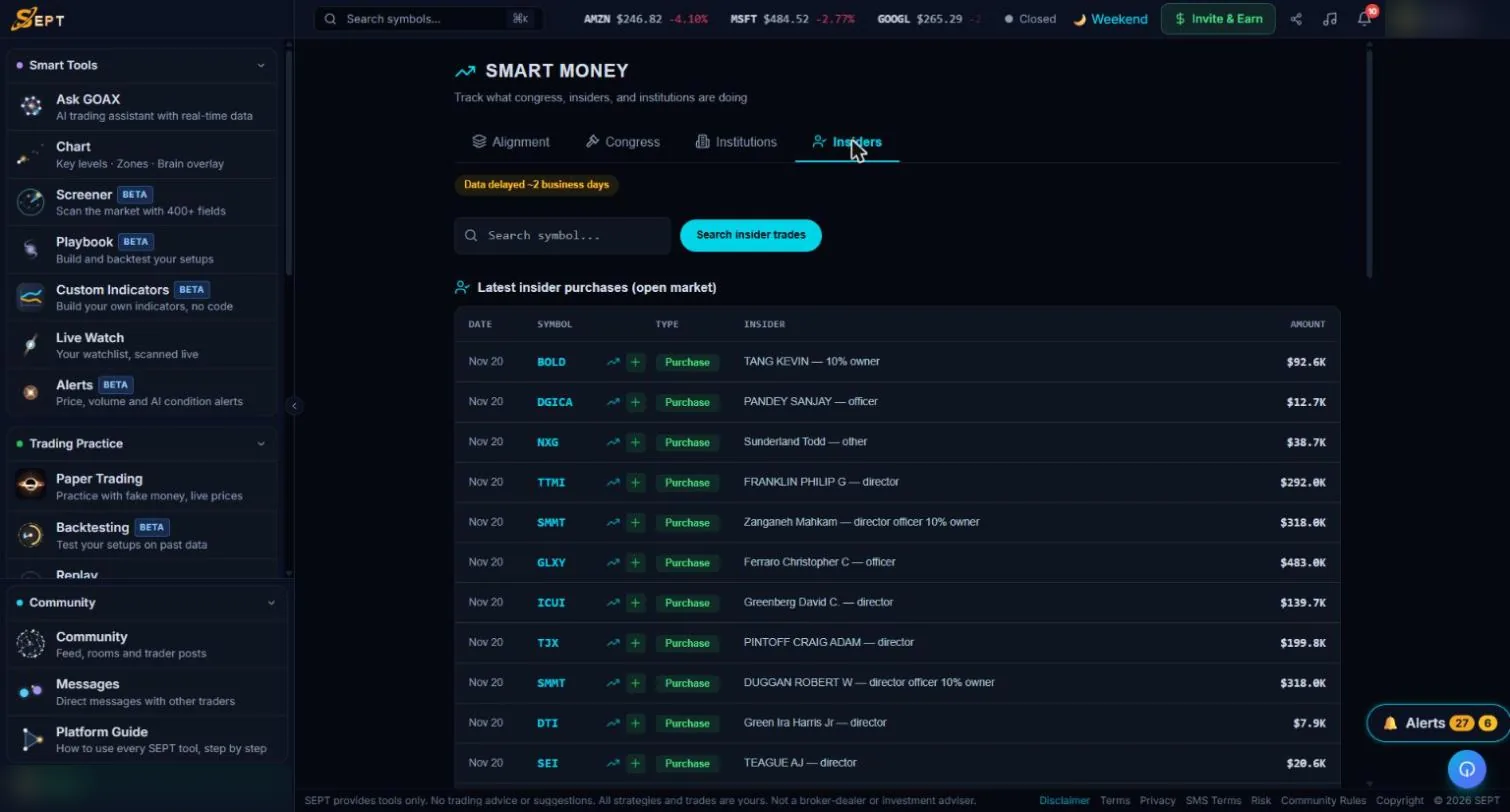
Next to the trades behind the price
Open any stock on the SEPT chart, see its large off-exchange trades on the Dark Pool page, and its big options trades in Options Intelligence.
Congress, insider and 13F questions
Is congressional trading data public?
Yes. Members must report their trades, usually within 45 days, so the data is delayed.
What is a 13F?
A quarterly report large funds file listing their stock holdings.
What counts as an insider purchase?
An officer, director or 10% owner buying shares on the open market, reported to the SEC.
See the filings free
Start freeQuestions? Contact us.
Data and education only, no investment advice. SEPT provides tools only; all setups and trades are yours. Data comes from public SEC and congressional filings and is delayed: Congress up to 45 days, funds about one quarter, insiders about 2 business days. A reported trade says nothing about why it was made.